Trump: ‘We are looking at approving natural 7-OH’
“President Trump said his administration is trying to keep ‘natural 7-OH’ available. That distinction matters, and it is the same distinction lawmakers and regulators should be moving forward.

“President Trump said his administration is trying to keep ‘natural 7-OH’ available. That distinction matters, and it is the same distinction lawmakers and regulators should be moving forward.

WASHINGTON, D.C. – New reporting from Politico and Forbes continue to reveal that the growing
campaign against 7-OH is being driven less by science and more by political influence and industry
money. “Big Kratom,” led by the American Kratom Association (AKA) and the Global Kratom Coalition
(GKC), is working to suppress 7-OH because it threatens their billion-dollar grip on the market.

In my decades in law enforcement, I learned that some of the worst policies are the ones designed to look serious without solving a serious problem. They eat up time, money, and attention, then leave officers and communities worse off. That is exactly what worries me about House Bill 2415, now under consideration in Arizona.
The bill targets kratom, a plant-derived product some adults use for pain relief and to reduce withdrawal symptoms from opioid addiction. Most dramatically, it would criminalize 7-hydroxymitragynine, or 7-OH, one of kratom’s naturally occurring compounds by turning distributors and consumers into criminals. To enforce this mandate, officers would have to conduct time-consuming product inspections, rely on costly lab testing to determine chemical content, and make difficult judgment calls about whether people in pain should be treated as criminals.

Most Arizonans have never heard of kratom or 7‑hydroxymitragynine—known as 7‑OH. They soon might.
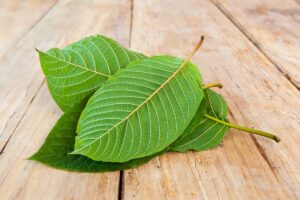
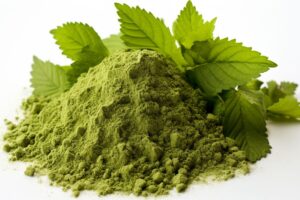
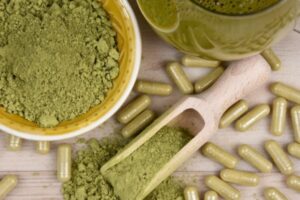
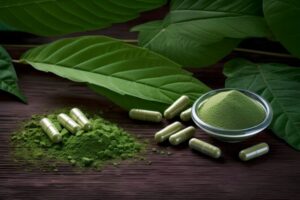
Kratom is a plant native to Southeast Asia whose leaves have long been used for their mild stimulant and analgesic effects. In the United States, people often use kratom to manage chronic pain, reduce opioid use or ease anxiety. One of its naturally occurring compounds is 7‑OH, present only in trace amounts in the leaf but responsible for some of kratom’s analgesic properties. More recently, manufacturers have produced concentrated or semi-synthetic versions of 7‑OH and marketed them in higher-potency products.

Bryan Mauk, CEO of End It for Good.
Ohio shouldn’t fight a war that Ohioans can’t win.
At the request of Gov. Mike DeWine, the Ohio Board of Pharmacy recently enacted an emergency rule banning the distribution, possession and sale of kratom-related products in the name of public health. In practice, however, the rule is more likely to endanger public health than protect it.
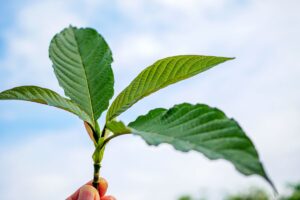
Kratom is a natural extract from kratom trees commonly used to manage pain and regulate mood.
In its natural form, it primarily contains the alkaloid mitragynine.

For mothers, the instinct to protect is hard-wired. We protect our children from danger, from bad influences, and from policies that sound good on paper but fail families in real life. But protection is not the same thing as prohibition, and confusing the two has tragically cost American families before.
Today, the United States faces a crisis few policymakers want to name plainly: America has a pain problem.

As a neuroscientist, I’m trained to follow the evidence even when it’s inconvenient. As a community advocate in the Tampa Bay region, I’m trained to listen to people whose lives are affected by policy decisions made far from where the consequences are felt.

Washington, DC — Six months after the U.S. Department of Health and Human Services (HHS) and the Food and Drug Administration (FDA) announced their intent to schedule 7-hydroxymitragynine (7-OH), a naturally occurring alkaloid derived from kratom, the number of confirmed deaths linked exclusively to 7-OH still remains zero.

WASHINGTON, D.C. – In case you missed it, a recent Guest Column published in the
Columbus Dispatch offered a timely perspective on Ohio’s ongoing debate over kratom and 7-hydroxymitragynine (commonly called 7-OH), urging lawmakers to rethink a broad ban in favor of balanced policy.
Bryan Mauk, CEO of End It for Good, has over 15 years of experience supporting people affected by addiction, homelessness and incarceration. In the op-ed, Mauk notes we have seen this path before, writing:
“Unfortunately, decades of the failed ‘war on drugs’ show that such bans rarely work.
Instead, they push drug use underground, create black markets and make drugs more dangerous, all while criminalizing users.”

Los Angeles – More than 32,000 Americans have joined together to oppose a federal ban on 7-hydroxymitragynine (7-OH), marking a major milestone in a rapidly growing national movement pushing back against what advocates describe as government overreach that ignores science, real-world data, and lived experience.
The 7-HOPE Alliance, (7-HOPE) and The Holistic Alternative Recovery Trust (HART) announced the milestone today, underscoring a clear shift in the national conversation surrounding 7-OH. Once framed almost exclusively through fear-based narratives, the compound is now increasingly discussed by scientists, consumer advocates, and major media outlets as a potential harm-reduction tool that warrants responsible regulation, not prohibition.