
Source: The Columbus Dispatch
Excerpt:
Decades of the failed “war on drugs” show that such bans rarely work.
Bryan Mauk, CEO of End It for Good.
Ohio shouldn’t fight a war that Ohioans can’t win.
At the request of Gov. Mike DeWine, the Ohio Board of Pharmacy recently enacted an emergency rule banning the distribution, possession and sale of kratom-related products in the name of public health. In practice, however, the rule is more likely to endanger public health than protect it.
Kratom is a natural extract from kratom trees commonly used to manage pain and regulate mood.
In its natural form, it primarily contains the alkaloid mitragynine.
However, it can also be synthetically altered to produce related compounds, including the widely popular 7-hydroxymitragynine (7-OH), along with mitragynine pseudoindoxyl, dihydro-7-hydroxy mitragynine and 7-acetoxymitragynine. These altered kratom-related products are the targets of the new ban.
We’ve been here before
Unfortunately, decades of the failed “war on drugs” show that such bans rarely work. Instead, they push drug use underground, create black markets and make drugs more dangerous — all while criminalizing users.
Instead of banning kratom-related products, Ohio lawmakers should regulate them to better protect consumers.
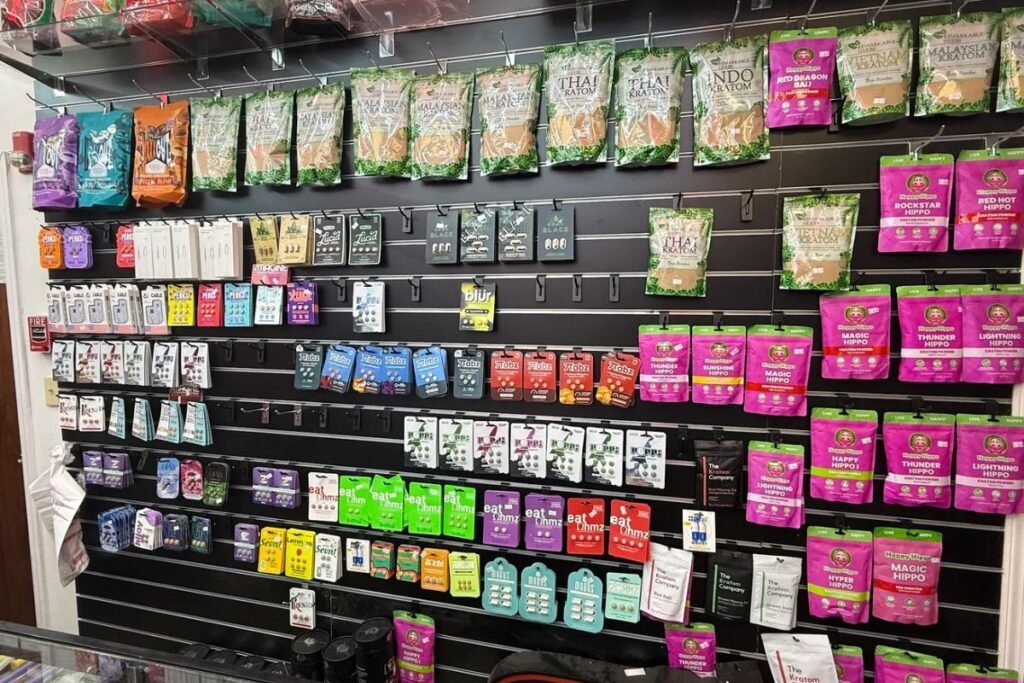
Kratom derivatives are primarily sold as tablets, drinks, gummy candies, vapes and powders in convenience stores and vape shops.
While some people use these products recreationally, others report using them for pain management. Still others report that 7-OH in particular has helped them manage opioid addiction.
Kratom and its related products represent abillion-dollar industry. Anestimated 1.9 million Americans used kratom products in 2022, but some use estimates aremuch higher.
Pushing kratom to the shadows is the wrong move
According to the World Health Organization, deaths from kratom use in general, including its derivatives, are exceedingly rare. And in the few cases where fatalities are reported, almost all involve the use of another substance, such as fentanyl or heroin.
This is not to say that kratom-related compounds carry no risk. All drugs do.
These products are not regulated at the federal or Ohio-state levels, making them susceptible to safety issues, contamination and misleading labeling. And we know that 7-OH has the potential for abuse and addiction; Ohiofamilies have already felt its impact.
But pushing their use into the shadows via a ban would make kratom-related compounds more dangerous.
Prohibition would do nothing to eliminate preexisting demand.
And cartels and criminal enterprises would be happy to fill the void of a legal market with an unregulated underground alternative where they could easily lace products with more dangerous chemicals — just as we already see in the illicit markets for heroin and fentanyl.
A war kratom will come with consequences
Banning kratom-related products would also place additional strain on Ohio’s already overstretched criminal justice system. In Columbus, our most populous city, the police department is already short 146 officers. The city does not have the capacity to tackle a new black market. And criminalizing users would do nothing to address addiction. In fact, the trauma of incarceration often worsens substance use and leaves lasting scars on families and communities.
This is especially concerning given that Ohio continues to battle an opioid epidemic, with 3,664 residents dying fromopioid overdoses in 2023. Furthermore, if 7-OH products can help manage opioid dependency, banning them would only hinder research and delay potentially life-saving solutions.
Kratom and its related products are not going away. A legal, regulated market offers a much safer alternative for consumers.
Lawmakers should remember this when the emergency order expires in June.
They will have a choice to make: Repeat the mistakes of the “war on drugs” or take a smarter, evidence-based approach to public health and safety.
By regulating all kratom-related products, setting clear safety standards, enforcing age restrictions and monitoring distribution, Ohio can protect consumers and support individuals struggling with addiction.
The choice is clear.
Bryan Mauk, CEO of End It for Good, has over 15 years of experience supporting people affected by addiction, homelessness and incarceration.